
Review Summary
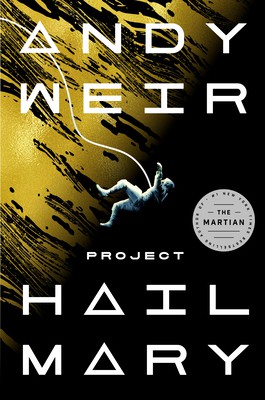
Andy Weir’s Project Hail Mary begins with a man waking in a spacecraft without knowing his name, location, or mission. Ryland Grace’s recovering memory allows the novel to operate simultaneously as survival story, scientific mystery, and character study.
Book Overview
Grace discovers he is the sole surviving crew member of a mission intended to prevent a solar crisis from destroying life on Earth. Present-day experiments alternate with memories of the project’s origins. The Ballantine Books hardcover is 496 pages.
Editorial Review
Weir makes technical reasoning dramatic. Experiments have hypotheses, failures, revisions, and consequences, allowing readers to follow the logic without specialized training. Grace’s humor keeps exposition energetic, although readers wanting less procedural science may find some sections detailed.
Writing and Structure
The alternating timeline controls information effectively. Each remembered episode changes the understanding of Grace and his role in the mission. The central development broadens the novel beyond solitary competence and gives it an emotional dimension withheld by the opening.
What Stands Out
The relationship at the heart of the book is inventive, funny, and convincingly built through communication, shared work, and mutual risk. It turns an impressive chain of puzzles into a reflection on cooperation across profound difference.
Audience and Literary Merit
Recommended for readers of science fiction, survival stories, space adventure, scientific problem-solving, and optimistic first-contact narratives. Technical explanations are frequent but approachable.
Final Assessment
Project Hail Mary succeeds as entertainment and speculative fiction. Its puzzles satisfy, its structure is carefully managed, and its final choices give the adventure genuine emotional resonance.