
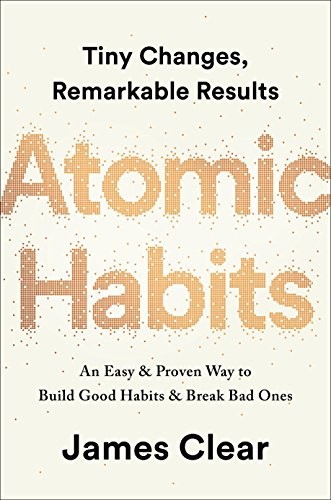
Review Summary
James Clear's Atomic Habits presents behavior change as a design problem rather than a test of character. Small actions compound when connected to identity, supported by the environment, and repeated through reliable systems.
Book Overview
Across 320 pages, Clear organizes habit formation around cue, craving, response, and reward, then develops four corresponding laws for building desirable habits. He reverses those laws when discussing unwanted patterns.
Editorial Review
The primary strength is translation. Clear turns ideas from psychology, neuroscience, and performance research into tools readers can apply immediately. Habit stacking, environment design, tracking, and reducing friction receive concrete examples and concise summaries.
Writing and Structure
Chapters are short, focused, and deliberately repetitive, supporting retention even when some examples feel familiar. The emphasis on personal systems is useful, though broader structural barriers fall outside the book's main scope.
What Stands Out
The distinction between goals and systems is especially effective. Goals describe a result; systems determine what happens repeatedly. This explains why intense motivation often produces less durable change than a well-designed routine.
Audience and Literary Merit
Recommended for readers interested in productivity, health, leadership, education, personal development, or organizational behavior, especially those seeking exercises rather than abstract encouragement.
Final Assessment
Atomic Habits delivers on its practical promise. Its advice is easy to understand without being simplistic, and its strongest ideas remain useful beyond the first reading.