
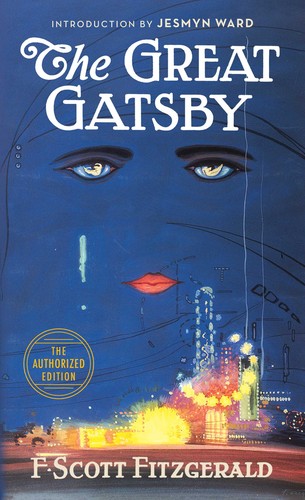
Review Summary
F. Scott Fitzgerald's The Great Gatsby remains powerful because its glamour never fully conceals its sadness. Through Nick Carraway's watchful narration, Jay Gatsby appears as both an impressive creation and a man trapped by the story he has invented about himself. The result is a concise tragedy about longing, privilege, and the dangerous belief that the past can be recovered intact.
Book Overview
Set primarily on Long Island during the summer of 1922, the novel follows Nick as he enters the orbit of his mysterious neighbor. Lavish parties, old-money marriages, and protected secrets converge around Gatsby's devotion to Daisy Buchanan. This Scribner trade paperback edition contains 208 pages.
Editorial Review
Fitzgerald builds the novel through contrast: spectacle against emptiness, romantic language against moral carelessness, and Gatsby's extraordinary hope against the boundaries he cannot overcome. Nick's unstable position as participant and observer deepens the story rather than weakening it.
Writing and Structure
The prose is lyrical without becoming diffuse. Images of light, weather, color, and distance recur with increasing weight, while the compact chapter structure keeps the story moving toward its inevitable conclusion.
What Stands Out
The novel makes Gatsby admirable, troubling, and vulnerable at once. Fitzgerald neither reduces him to a fraud nor accepts his dream at face value, giving the final chapters their emotional force.
Audience and Literary Merit
Best suited to readers of American classics, literary fiction, and character-driven tragedy. Its brevity, symbolism, and layered narration also reward book-club and classroom discussion.
Final Assessment
The Great Gatsby earns its status through precision. It is a beautifully controlled novel whose critique of wealth and yearning remains clear long after the parties end.